
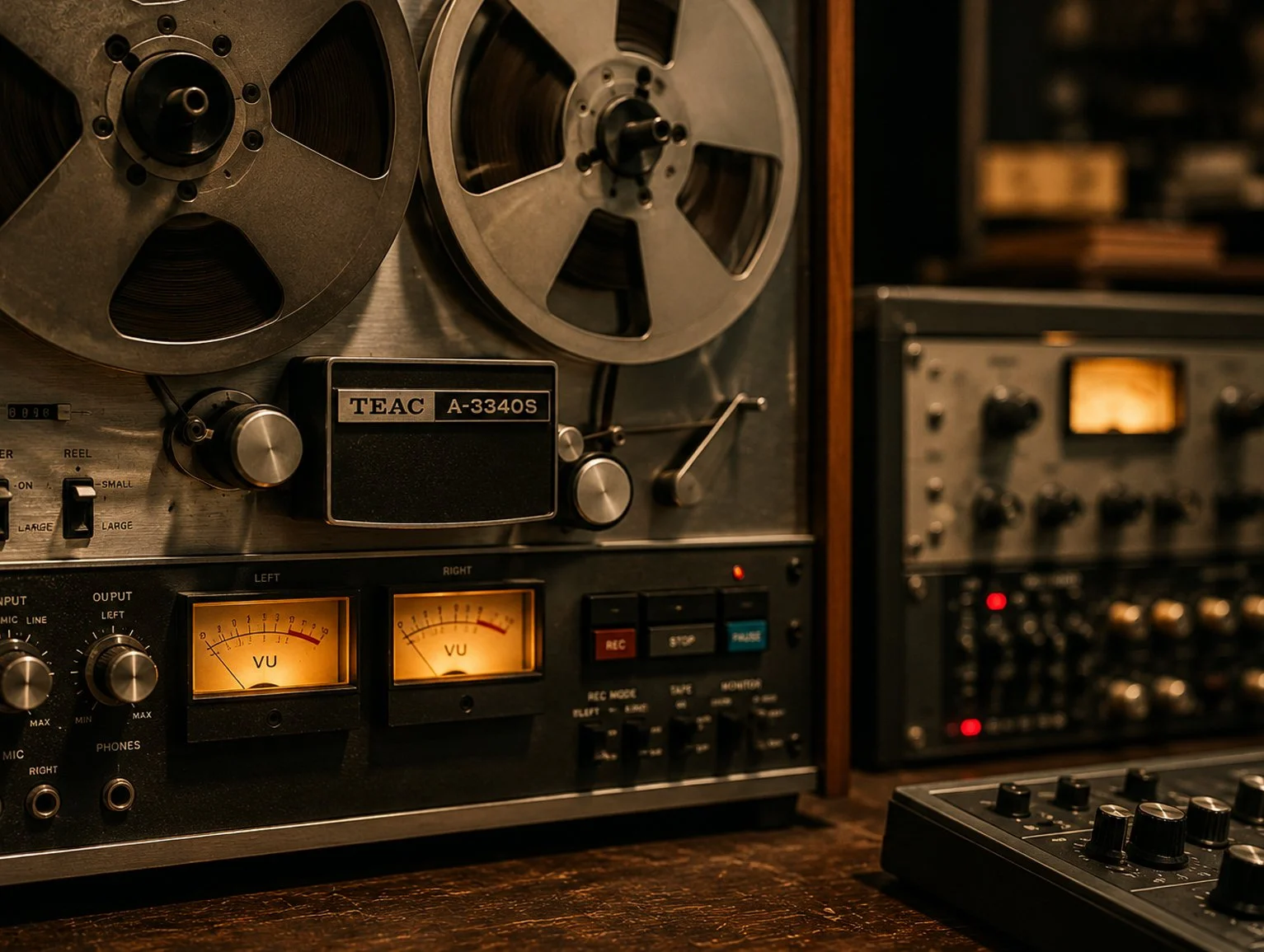
The Return of Analog Recording and the Search for Imperfection
The Return of Analog Recording
Nowadays, everyone seems to have a microphone and a laptop. Digital audio workstations have completely reshaped music production, making it faster, cheaper, and more accessible than ever. But in recent years, analog recording has quietly come back into focus within modern music production—not as a replacement for digital tools, but as a deliberate choice by artists chasing a different sound.
Why Analog Recording Still Feels Different from Digital
You’ve probably already tried plugins that promise to make your recordings sound more analog. Some get close. But analog isn’t just a “vibe” you can fully replicate with software. It’s tape saturation, harmonic distortion, natural compression, and the small imperfections that happen when sound is physically printed onto tape. In a digital setup where every note can be corrected, aligned, and polished into place, music can start to lose any evidence that it was crafted by humans. Analog brings back tape hiss, room bleed, slight pitch inconsistencies, and performances that aren’t perfect, but feel real. That sense of intimacy is part of why recordings by artists like Elliott Smith resonate so deeply—listeners can hear the room, the fragility, and the imperfections in the performance.
Streaming Fatigue and the Push for Texture
Much of this shift comes down to fatigue. Streaming has pushed production toward clarity, loudness, and playlist-friendly polish. The result is a sea of music that sounds clean, controlled, and strangely similar. Indie artists have responded by leaning into analog gear and lo-fi techniques as a way to bring back texture and identity. Even artists working heavily within digital production, including Tame Impala, often blur the line—mixing tape machines, vintage hardware, and old-school methods with modern digital recording.
Lo-Fi as a Reaction to Polish
This preference for imperfection carries over into lo-fi approaches, where rough edges are not treated as mistakes but as part of the sound itself. In many ways, lo-fi emerged as a direct response to the same pressures shaping modern production—an emphasis on clarity, control, and constant refinement. Rather than competing with that standard, it moves in the opposite direction, treating limitation and imperfection as part of its aesthetic DNA.
The Reality of the Recording Process
There’s something about the way analog recording slows everything down. Tape is expensive, unforgiving, and doesn’t yield to endless revisions. You rehearse more, commit earlier, and live with the performances as they are. This is in sharp contrast to today’s over-polished production process, where songs can be endlessly tweaked and released instantly. For many artists, analog isn’t just about sound—it changes how you make decisions in the studio, shaping the entire analog recording workflow
Hybrid Production in Practice
This is not a rejection of digital production. Most independent artists cannot afford to work fully in analog, so hybrid setups have become quite popular. Tracking to tape and then editing and mixing in the box allows artists to keep some of that analog character without losing flexibility. In practice, it’s not about choosing one system over the other, but about using analog as a texture within a digital workflow. At its core, this shift has less to do with nostalgia and more to do with limits—choosing constraint in a system built on infinite revision.
Why Imperfection Still Matters
That same mindset has helped sustain the appeal of lo-fi and home-recorded music, where imperfections are treated as part of the emotional experience rather than flaws to be erased. In a landscape defined by speed and polish, many indie artists are rediscovering the value of recordings that feel unmistakably human. Those are the recordings that tend to find their way here.
You might also enjoy: Best Indie Songs for Late-Night Drives, Artists Like Phoebe Bridgers, In Defense of Lo-Fi Music, What Is Lo-Fi Music?, Artists Like Elliott Smith, 14 Artists Like Tame Impala, The Return of Physical Media
-TM