
Ryan Rickenbach – ‘Sirens’
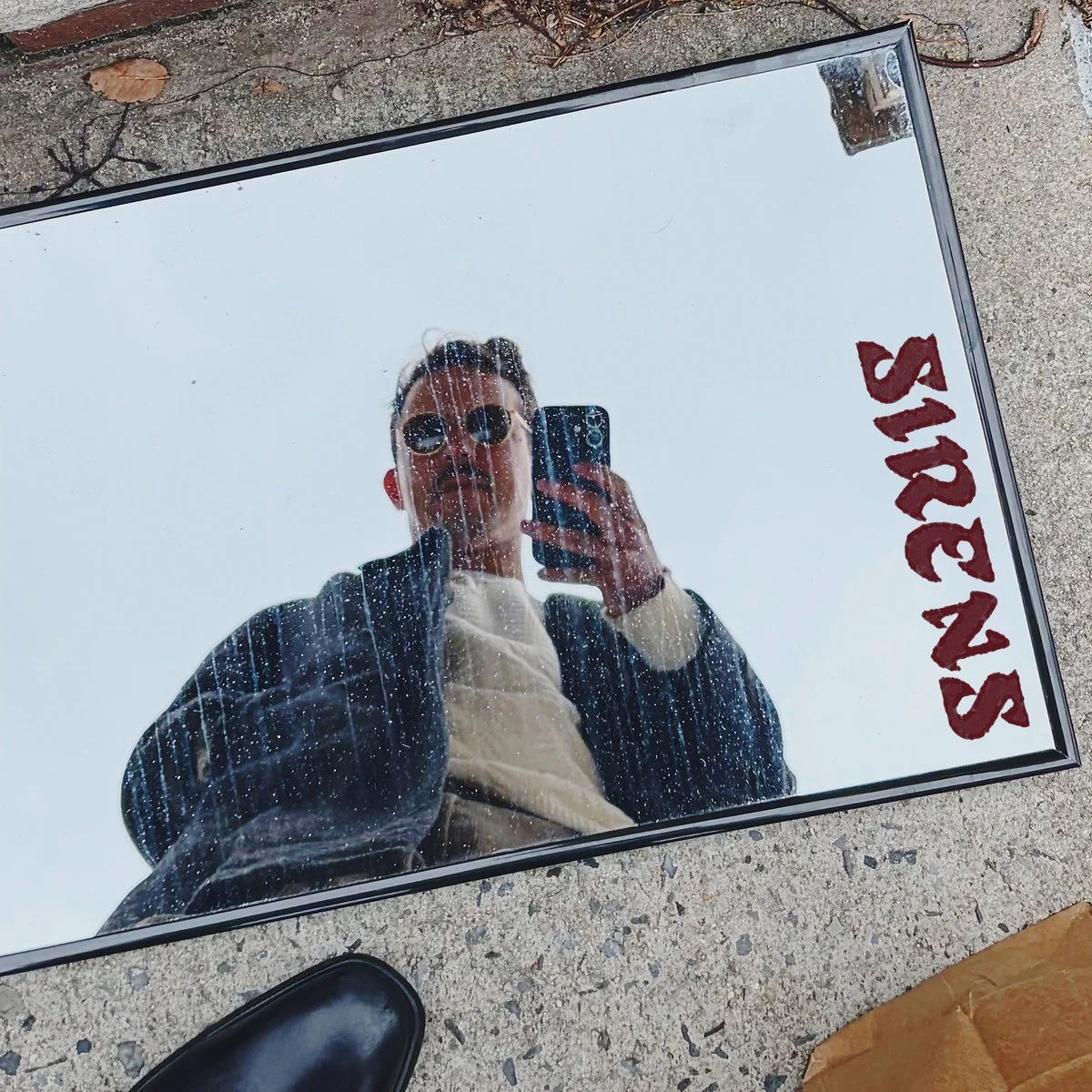
After a seven-year hiatus, New York-based Ryan Rickenbach has found his way back with Sirens, an ambitious collection of twelve indie songs steeped in the rootsy sounds of Americana. Let’s take a deep dive:
The LP opens with “Bad Man,” an acoustic guitar-driven burner that can break you with its nostalgic weight. It’s warm, it’s friendly, and it enters the ears like a record you’ve had in your collection since the 1970s, designed for lazy Sunday mornings or evening unwinds. Beneath the track’s bouncy spirit, the subject matter reveals something far more conflicted: a narrator who doesn’t trust closeness, turning seduction into conflict and preemptively casting himself as the villain in order to avoid being hurt first. All of this darkness is wonderfully packaged in an uplifting, barebones arrangement, elevated by delightful harmony vocals in its final third.
Track 2 is a number titled “Cocaine Blues,” with a sweet, acoustic-led country blues sound that owes more to Lightnin' Hopkins than Stevie Ray Vaughan or Clapton. It avoids the overplayed blues clichés that other artists might reach for. The key ingredients are the same as “Bad Man,” however, the overall sound is detached from the more folky, easy listening vibe of the former. Bass and drums, played across the record by Cass Dillon, set a remarkable foundation, allowing “Cocaine Blues” to fully come to life. It is within the lyrics that the song stops being a blues pastiche and becomes a character sketch: “Well I looked in the mirror said I'm an addict / I felt a bit better then I went back at it.” The narrator isn't in denial. He knows exactly what's happening. He just doesn't care enough to stop.
From there, we hit “Hallelujah Here We Go,” which is where we really start to feel the full shine of Rickenbach’s vocal. He’s got a great Vance Joy kind of thing happening with this one and it is easily one of our favorites from the record. Lyrically, it portrays someone wrestling with the gap between who he wanted to be and who he actually is, a realization that carries a surprisingly painful weight. The first third is just Rickenbach, his guitar, and the listener, which is a deeply vulnerable window into his world. But before we struggle to keep awkward eye contact, the rhythm section arrives to give the tune a steady, upbeat bounce. We’d argue that “Hallelujah Here We Go” is the emotional centerpiece of the LP; however, there’s still plenty to discuss.
“Morphine Heart” will more than likely resonate with anyone who has ever loved the wrong person, especially after convincing themselves they were right all along. Our condolences to those listeners, but we're also happy to report that Rickenbach has provided the perfect soundtrack for the occasion. “Morphine Heart” doesn't tease us with an intro, allowing this blues-kissed acoustic guitar-driven banger to hit immediately with all cylinders firing. It’s got a bouncy, 1970s rhythm and a vocal delivery that, at times, carries a Chris Isaak sense about it, complete with howling falsettos and matter-of-fact verses. Together, they allow Rickenbach to capture that familiar experience of charging headfirst into a relationship despite knowing exactly how it will end.
The placement of “Found Familiar” is no accident, as it plays like the side B of “Morphine Heart.” Here, we find the tempo slowed down to more of a ballad, utilizing the same key ingredients but with more of an introspective approach. He isn't mourning a lost relationship. He isn't trapped in a bad one. He's imagining a future connection and feeling lonely because he simply hasn't found it yet. For the majority of the tune, Rickenbach has deployed a vocal harmony that acts like a companion to the lead, reinforcing the song's longing for connection. “Found Familiar” is a gentle reminder that loneliness doesn’t always come from losing someone; sometimes, it comes from waiting for them.
Entering the LP’s halfway point, “For You” offers the first real glimpse of hope. “Found Familiar” was: I haven't found you yet, and that absence hurts. “For You” is: I wandered everywhere, and somehow I found you. Six songs in, and this tune is straight-up folk music, consisting of delightfully plucked acoustic guitar and Rickenbach’s vulnerable vocal. The sparseness of the arrangement allows it to resonate quite deeply with the listener, making it feel like our narrator has finally found love.
“Come Thru” is a bit of a bongo-driven bop, with its upbeat production contradicting the unease at the heart of the lyrics. Complete with “ooohs” on the final third, this is energetic ‘60s-kissed acoustic pop with a timeless feel that wouldn't have sounded too far out of place drifting from an AM radio half a century ago. Yet beneath its sunny exterior lies a narrator quietly convincing himself not to assume the worst while doing exactly that.
At first glance, “Porcelain” is about loneliness and wanting somebody. But the deeper conflict is that the narrator is starting to realize that the relationship might be costing him pieces of himself. This concept allows the song to become the side B to “Come Thru.” The former deals with the uncertainty of anxious attachment while “Porcelain” is a brighter beacon of self-awareness. Like most of the LP, it sounds like it’s already permeating directly from your record player, with thick, rich analogue flavor pumping through the rhythm section– easily one of our favorite bass lines on the record. By the time the song reaches its conclusion, self-doubt has given way to self-awareness, making “Porcelain” one of the LP’s most emotionally mature moments.
“In Two” shows the first hints of mandola, which Rickenbach promised we’d hear. And though this Irish instrument lays the foundation of the song, it’s the vocals that ultimately keep it rooted in Americana. For us, “In Two” describes a choice: this isn't just a love song; it’s a song about arriving at love after experience. About a third of the way through, that faithful rhythm section arrives, again with a juicy bass line that adds movement to the arrangement. And although this is a highlight, we would be remiss not to mention the heavenly layers of harmonies that beautifully complement Rickenbach's lead.
As far as lyrics are concerned, “Fruit Tree” steals the poetic show. Built upon softly strummed guitar and some subtle accents on the hats, this tune carries listeners into a symbolic world of love, memory, decay, and the lingering aftertaste of both––easily the LP’s most literary moment. With the eventual arrival of the palm-muted bass and drums, this one delivers an old-school cowboy lineage, with a layered refrain that feels made for the desert after the horses have been stabled. It's the kind of song that doesn’t simply get heard. It gets absorbed.
“Lover Lay” is the longest track on Sirens. At over five and a half minutes in length, this slow-burning hunk of a folksy love song justifies the space it takes up sonically with the emotional weight of the subject matter. After all the searching, mistakes, and anxiety throughout the album, the narrator has finally reached a place where love can be a source of rest instead of conflict. The patient pacing gives every note room to breathe, allowing the warmth of the arrangement to match the tenderness of the lyrics. If life were a movie, “Lover Lay” would be the soundtrack to slow dancing in the kitchen with the love of your life.
The record closes with “Down In The Country,” which feels quite intentional. After an album spent wrestling with the complications of love, Rickenbach settles on something much simpler: the idea that the right connection can remain, even as time moves forward and everything else changes. There is also a shimmering layer of reverb across the vocal performance that only fully reveals itself in the spaces between the strummed chords. A shuffling rhythm takes form, and we cannot decide what we like more: the weathered falsetto or the confident hums of Rickenbach’s voice.
Sirens is a record about the complicated pursuit of connection: the walls we build, the mistakes we make, the people we idealize, and the vulnerability required to finally let someone in. It’s bound to resonate quite deeply with listeners due to its ability to sound human, particularly in an age where it is increasingly rare to do so.
Connect with Ryan Rickenbach: Spotify | Bandcamp | Instagram | TikTok | Website
-TM