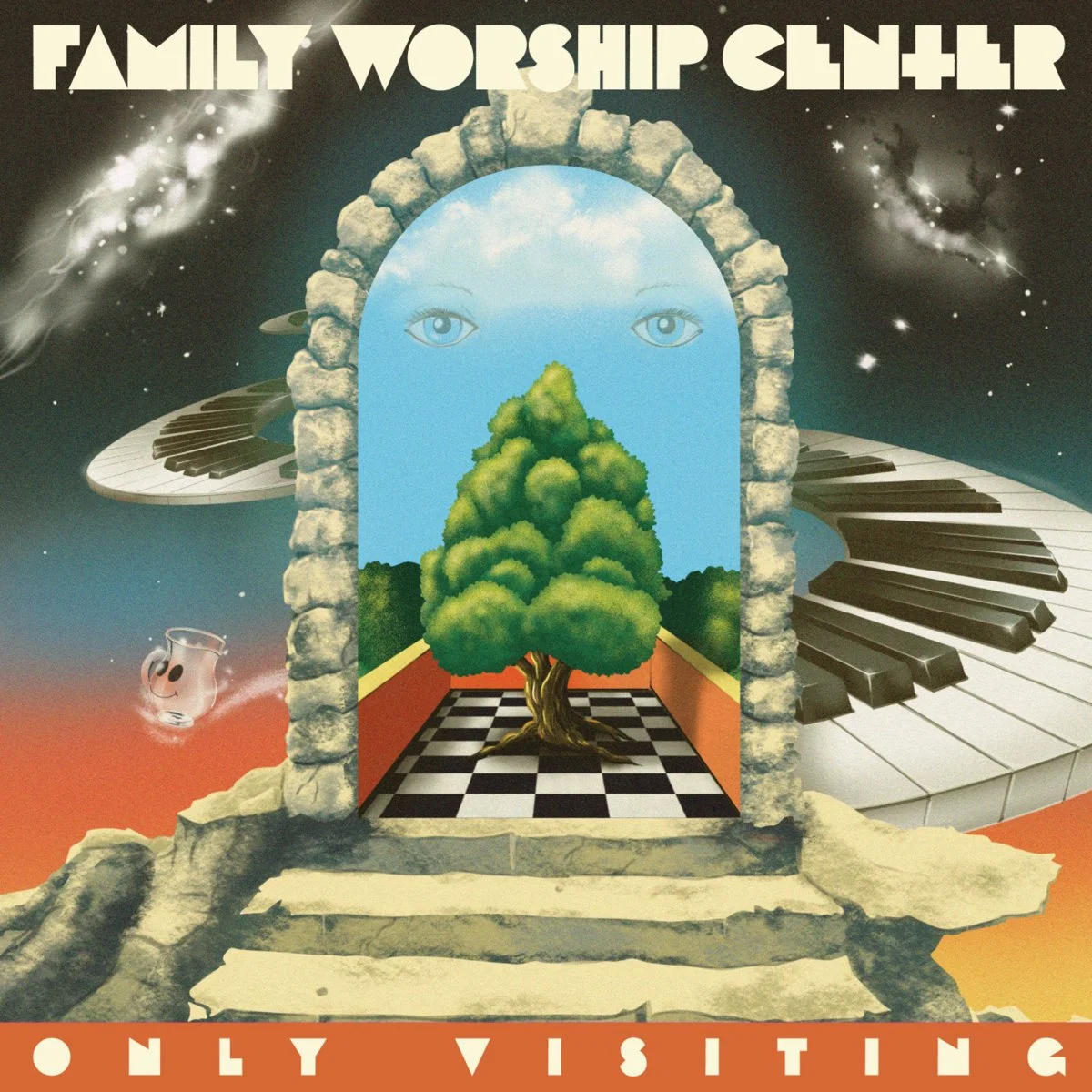
The Gospel According to Groove
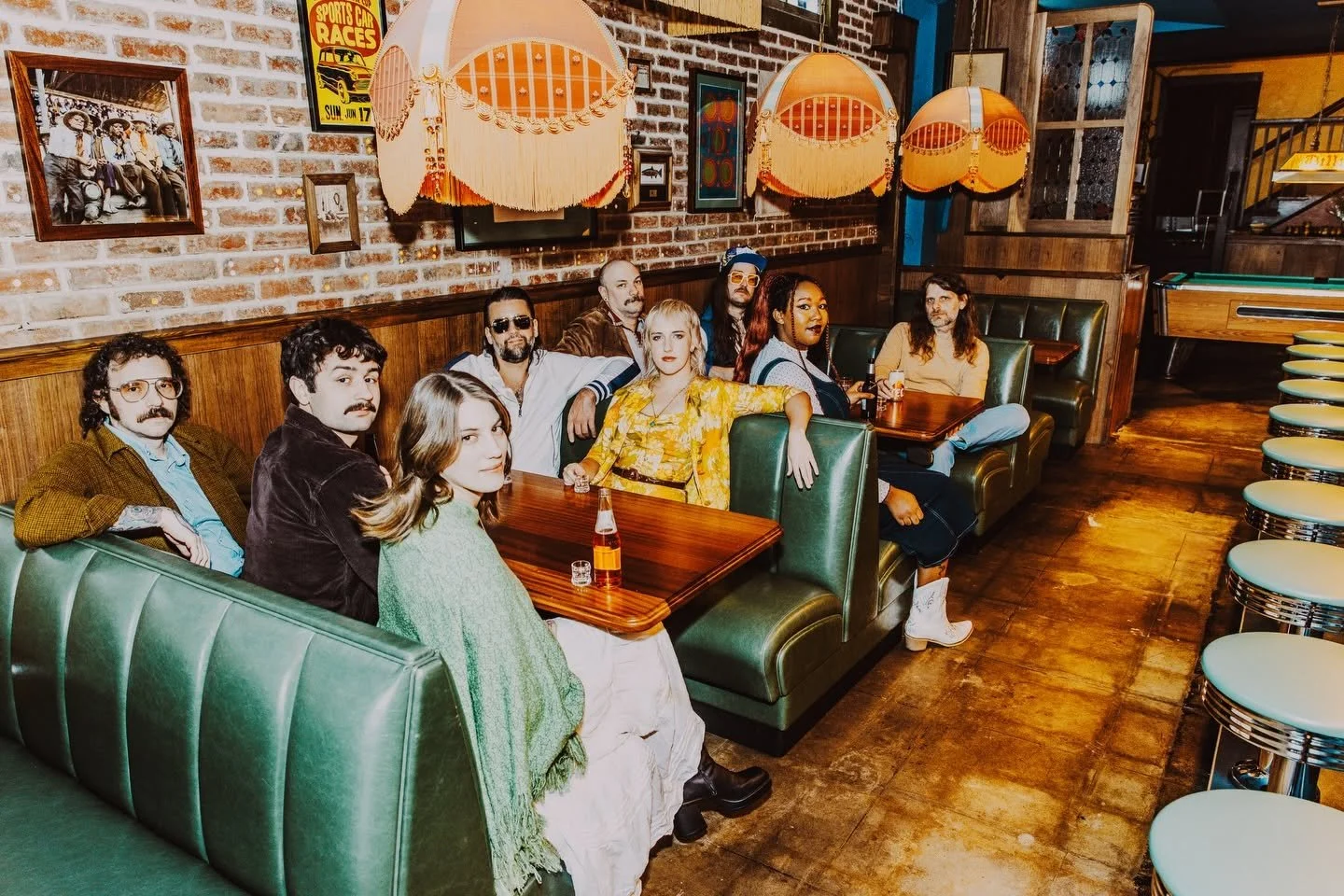
Photo by Madelyn Stellingwerf
We recently sat down with Family Worship Center to discuss their new LP Only Visiting, their alleged status as a cult, and the power of Groove. Naturally, the conversation took a few unexpected turns.
Q: Before we begin, I feel I need to say that I’ve informed everyone of my whereabouts, including the authorities. If I suddenly disappear and begin distributing Family Worship Center literature door-to-door, they know where to start looking. Do you agree to these terms?
A: Yes, once you are in The Family, you are never really lost. So I don’t think there is any need to worry.
Q: How long had you been together before you stumbled across the questionable literature from which you drew your name?
A: I started doing field recordings in 2016, and during my travels I stumbled across the literature that would shape the identity of the band. I found it in a rundown record store and became fascinated with the message. I ended up reappropriating a lot of those ideas, which became the base for our first EP, Sunday A.M.
At the time, Family Worship Center wasn’t really a band yet, it was more of an idea, a studio project. We recorded the EP in Nashville with a group of killer studio musicians: Ron Eoff (Cate Bros, The Band), Robbie Crowell (Deer Tick, Sturgill Simpson), Trey Pollard (Faye Webster, Kevin Morby), with Jonell Mosser and Kashena Sampson on backing vocals, plus a 13-piece horn section made up of players who have probably appeared on over half the modern records in existence. The album was recorded and mixed by Eddie Spear (Sierra Ferrell, Jesse Welles).
That’s a lot of name-dropping, but I was living in Nashville at the time, between the friends I made through vinyl cutting and my buddy Jack Evan Johnson, who also played guitar on the record, we had the opportunity to make something true to the source material.
I ended up moving to the West Coast a few years later, and that’s when we started the actual band. Every record since has been recorded by our 12+ piece collective.
Q: How much of Family Worship Center's sound can be attributed to your alleged status as a cult?
A: More than we’d like to admit, I’m sure.
It’s hard to separate the sound from the cult. When you get 10-15 people in a room who all are devoted to the same purpose, eventually it starts sounding like Family Worship Center.
Q: Do you have an official stance on Kool-Aid?
A: Please see page 18 of our Bible.
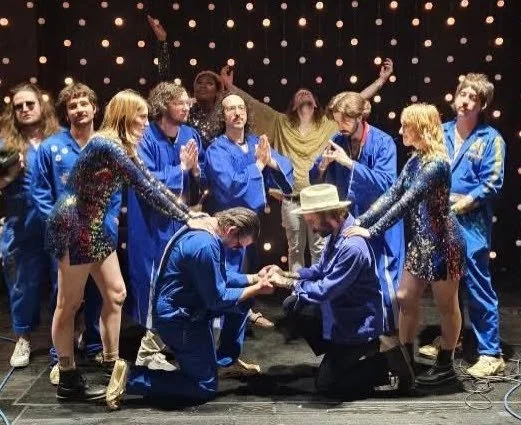
Q: Hypothetically speaking, if a member wanted to leave Family Worship Center, would that even be permitted?
A: Once you’re in the band and begin performing with us, you’re assigned a number that reflects when you joined in the Family’s lineage. Members receive that number as a tattoo, marking their place in the group’s history and their commitment to the collective.
From that point forward, you’re part of the Family. We do not believe in modern tattoo removal methods, so leaving is intentionally difficult. The tattoo serves as a permanent reminder of your connection to the group and our ideals.
Q: All kidding aside, your music strangely aligns with the soundtrack of the late '60s. And although this was (coincidentally) when Charles Manson was most active, who would you cite as your biggest musical influences?
A: Hah, Thematically we actually owe a lot more to other cults / psychedelic movements from the '60s. Sonically, the harmonies of '60s vocal and gospel groups, and of course Little Feat, The Band, The Mac, The Dan, Curtis Mayfield, Leon Russell, various private press recordings, and all things Muscle Shoals.
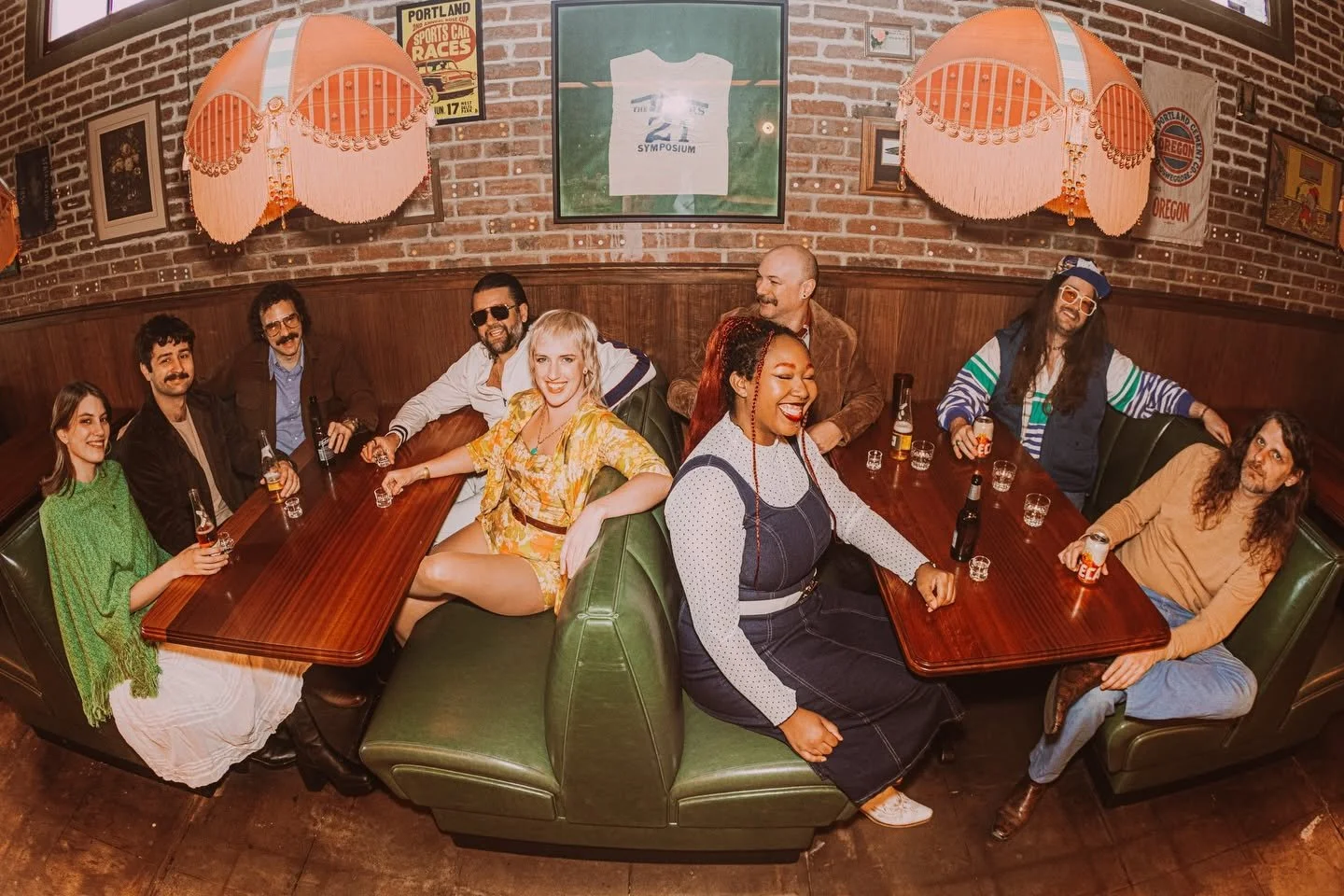
Photo by Madelyn Stellingwerf
Q: I bit the bullet and had a listen to your new LP, Only Visiting. My holy entity, this thing is a masterpiece. Why did you wait until it was already out before sending us “Buggin’ Out Pt. 2?”
A: That means a lot, thank you. One of our core beliefs is that time is irrelevant. This album came out before we were born in our current bodies, and it will continue to come out long after those are gone. It will be the beat to our cadence thousands of years from now, when we’re walking hand in hand through war, famine, hunger, and ultimately love.
Q: If someone locked me in a room and demanded that I identify the "most Family Worship Center" song on Only Visiting, which track should I choose and why?
A: “FOY” was the hardest song I’ve ever written. Getting the arrangements and movements dialed in felt like pulling together every influence I’ve ever had but still retaining our sound. I’m sure we’ll top it on the next record, but for now it’s my current masterpiece. (See it live and you’ll probably understand what I mean.)
“Malibu by Midnight” is my favorite song to listen to on the album. Although when the bari sax and clarinet come in on “Buggin’ Out Pt. 2,” it gives me this nostalgic feeling, like biting into an apple.
The album was intentionally recorded as a song cycle, one singular piece of music, so can I just say you should listen to the whole thing?
Q: There’s a wonderful analogue flavor running through the album, from the horns to the rhythm section. And I know the official story is that this is a long-lost record from the 1970s, but...
moves microphone closer
…if you had recorded it yourselves, would you have reached for vintage outboard gear, tape machines, and old microphones? Or would you have embraced the conveniences of modern digital recording?
moves microphone away
A: To be transparent, this album is our take on the original recordings (we do plan to release those recordings at some point, but I’m not allowed to say much more than that). We wanted to stay true to the source material while elevating it with a heavier Groove, bigger performances, and more elaborate horn and string arrangements.
At this point, the Family is worldwide. The main horn arranger on this record (Alessio Castaldi) is carrying on the message in Spain, and the string arrangements are being handled by the chapter in Ukraine. To pull all of this together, we had to embrace modern technology, to allow us to record globally.
That said, the core tracks were recorded using the same microphones, instruments, and equipment you would have found in a studio in the early ’70s. During mixing, we bounced many of the tracks to tape and ran them through vintage preamps to help achieve the sound we were after.
Q: “Garden Grow” opens with an electric piano. That's a Rhodes, right? I referred to it as a Rhodes when I reviewed “Buggin’ Out Pt. 2.” Am I an idiot, or can I safely leave that review unedited?
A: Never doubt yourself, that is indeed a '73 88 Key Rhodes Suitcase.
Q: Quite honestly, I get the appeal. Hearing music this new that sounds this old makes me want to start a band that does the same thing. Is that how you reeled in most of your followers?
A: I will occasionally get folks who reach out who relay what you just said - “I’m trying to start a band, so I took your album with me to the woods with a bunch of psychedelics to try and get some inspiration.” That means the world to me, someone being inspired by what we’re doing to further their own personal art.

Q: At what point during a live show should audience members become concerned that they've accidentally joined something?
A: Most of the feedback I get comes from the live shows. It’s a huge band, barely fitting on the stage, dressed in sequin jumpsuits, robes, and tassels, going absolutely nuts and channeling a mix between a tent revival and Mad Dogs & Englishmen. When we’re playing to a new crowd, I can spot the people who are resistant to us, too cool or just utterly confused. By the end of the second song typically everyone is bought in. Music is a powerful thing, they get lost in the energy, and I think what we’re doing connects across different walks of life.
In general, in a digital world, people are searching for something real. I’m not trying to be big-headed (although we wrote a song about that on Only Visiting), but there are only a handful of groups out there doing what we’re doing on this scale. It’s definitely financially irresponsible, and I’m assuming that’s why it’s such a niche thing, but performing and writing brings us much joy, it’s irresponsible to not share that with the world.
The power of Groove is compelling.
Q: You’re currently touring the West Coast. Any plans to come to the Midwest?
A: Absolutely. The main challenge of having a band this large is that every tour is a production, so we’ve mostly focused on the West Coast where we can pile everyone into a van and point it in a singular, reachable, direction.
That said, we’d love to get out to the Midwest. If enough people show up, we’ll take the Revival just about anywhere. Consider this an open invitation for promoters, venues, and followers to get in touch.
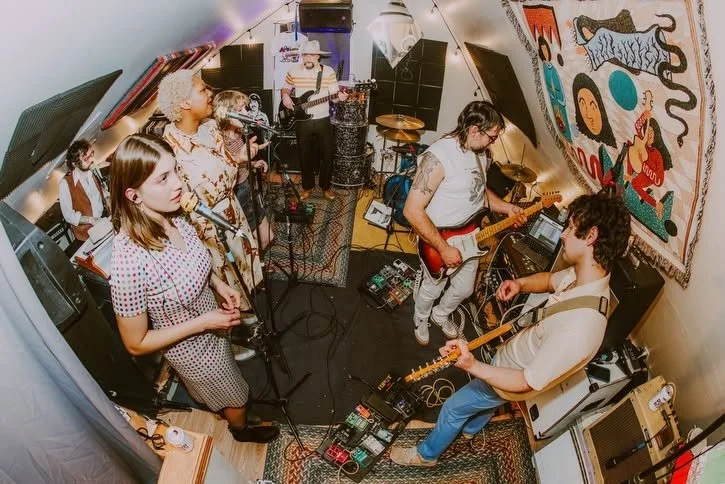
Photo by Madelyn Stellingwerf
Q: What's next for Family Worship Center? More touring, more recordings, or should we expect another mysterious field-recording expedition to uncover your next sacred text?
A: All of the above.
We’ve got more touring planned, we’re already talking about the next record, and I imagine I’ll continue wandering into the right place at the right time. I’m not counting on finding another lost text, as the current one seems complete, but I’m always on the lookout for any inspiration I can find in dusty '70s obscure private press LPs.
The Family has never stopped moving. As long as there is Groove to spread and songs to write, we’ll keep finding a way to move our art, love, and message forward.
At the end of the day, the message is pretty simple: be yourself, love yourself, and treat other people with that same love and understanding. We’re all infinite, but we’re sharing this finite world together, so let’s act as one.