
Eva Cassel Talks “Martyr”
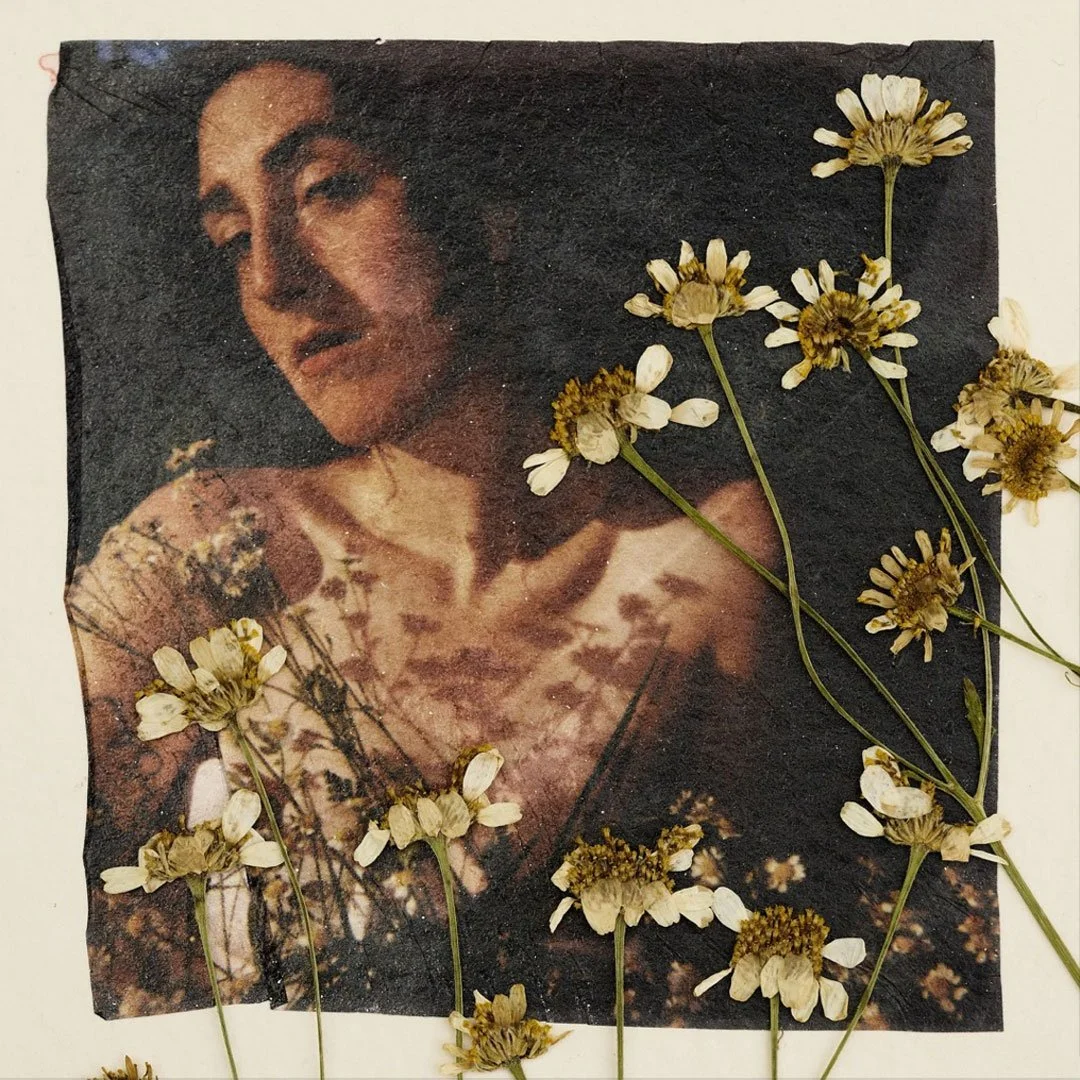
Artwork by Libby Danforth
Following the emotional weight of “Good Enough,” we caught up with Nashville, TN-based indie artist Eva Cassel to discuss self-trust, producing in her home studio, the subtle details hidden throughout her recordings, and how new single “Martyr” fits into the larger story of her forthcoming album, Slow Death.
“Good Enough” felt really immediate and personal. With “Martyr,” were you in a similar headspace?
When I wrote “Good Enough” I was struggling to break a long cycle of not trusting myself. “Martyr” was written before I was even aware that I didn’t trust myself. It’s personal and intimate but from a different point of view. Martyr embodies me in the trenches, whereas “Good Enough” was as I was walking away from the bloody battlefield. Even if you ‘win’ the battle the war still hurts.
You produce your own music, which we always find interesting because it makes everything feel so direct. When you’re working alone in your home studio, how do you know when a song is actually finished?
I don’t know if a song is ever fully finished. For me, it’s more about reaching a point where it feels like the idea in my head has been realized and the production feels like the fullest expression of the song at that moment. I think the life of the song is so much bigger than just the record. That helps me to let go of whatever version I’m working on, knowing that more versions will exist.

Photo by Savannah Lauren
One thing we loved about “Good Enough” was the push and pull between really bright instrumentation and heavier lyrical content. Does “Martyr” sit in that same space?
Yes, “Martyr” is layered in a similar way. The lush textures of the chords/production/vocal delivery contrast the seething anger in the lyrics. It’s deceptive, like a siren song on a foggy morning.
Your writing feels very emotionally open, almost like you’re letting people read something private. Has that become easier over time, or does it still feel like a bit of a leap every time you release something?
Thank you for saying that, it’s very important for me to write in an honest and vulnerable way. The same way I write in my journal or talk to my best friend. The writing process feels like untangling an emotional knot, helping me understand and process how I’m feeling. It’s being perceived that can be hard. When I play the songs live I feel like I have some sense of control over the vibe in the room, but I don’t get to experience everyone listening to the record. It’s impossible for a song to encapsulate every detail, truth, and complexity of an event or relationship. I think of songs as the most concentrated version of a feeling.
There are details in the production that really stand out if you sit with the track for a while. Are those things you plan from the start, or do they tend to appear as you’re building the song?
A lot of it appears as I’m building the world of the track. I always envisioned a muted trumpet on “Martyr” - a little nod to one of my favorite jazz musicians, Chet Baker. But it wasn’t quite right and the French horn fit perfectly. At the very beginning there’s a voice memo I recorded of the ‘slammer door’ closing at alcatraz. I didn’t know what I’d use it for, but I knew I had to capture it. There’s also a voice memo of birds at golden hour in the springtime that appears at the beginning and the end. I wanted to incorporate pieces of real life into the production making it intimate, real, and cinematic.
If someone hears “Martyr” first and has no context of who Eva Cassel is, what do you hope they walk away with?
I hope they got a little lost in it, it reminds them of some part of themselves, and they feel less alone. I hope to find other music lovers and word nerds who are obsessed with honest vocals, velvety guitar tones and walking through life heart open and curious.
We know Slow Death is built around different stages of grief. Where does “Martyr” sit in that process?
“Martyr” is the bargaining stage of grief. When I wrote this song, I was trying to understand what had happened and clinging to the false idea that it could somehow still be resolved because I was willing and to try and resolve it. Bargaining, to me, is one of the more complex stages of grief. I wanted the song to feel that way - cool but seething. Meditative but ominous.
You've spoken a lot about writing and producing the song. Who else played an important role in shaping "Martyr"?
Every musician who helped make this song what it is! Everyone on this song is ridiculously talented and a wonderful human being, and a good friend of mine.
I co-wrote this song with my dad, Jon Cassel. This record features Laura Berens (of Slap Dragon) on background vocals. Max Gerl, jazz bassist soon to be legend mentored by Stanley Clarke. Grace Quackenboss on keys, Braden Williams on French horn, and Aaron Lawson on drums. It was mixed by Max Challis and mastered by Margaret Luthar at Dark Sky Mastering.