
Allie Dever on “Bargain Price”
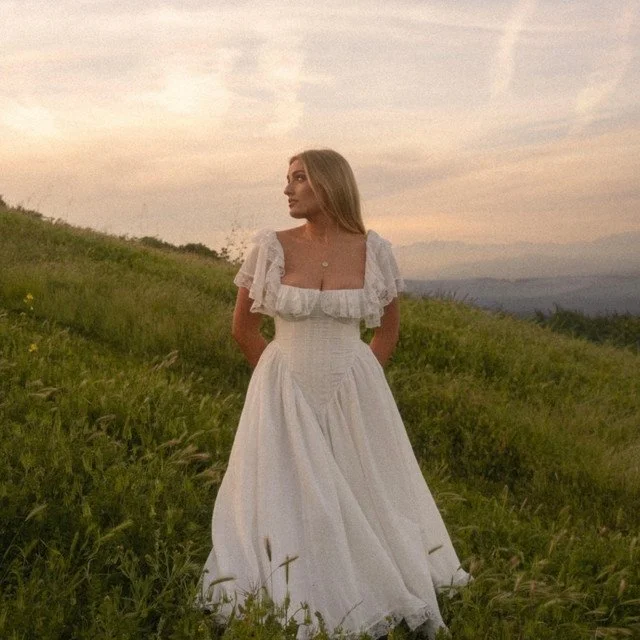
With “Bargain Price,” USA-based singer-songwriter Allie Dever explores the painful process of compromising your own worth in the hope of earning someone else’s love. Inspired by an old journal entry, the song reflects on emotional wounds, crossed boundaries, and the difficult realization that sometimes the person we need to stop bargaining with is ourselves. We caught up with Allie to discuss the story behind the song, its emotional progression, and her plans for a larger project, The House Always Wins.
There’s a really interesting progression throughout “Bargain Price”—from giving more to wondering what would happen if you gave less, and ultimately realizing how much you’ve abandoned yourself. Did this come naturally as you wrote the song, or was it something you intentionally built into the narrative?
I think it came pretty naturally, largely because I was writing from a place of hindsight. The song was actually inspired by an old journal entry I'd written a few years earlier, during a time when I was feeling really emotionally overwhelmed by a particular situation.
By the time I sat down to write “Bargain Price,” I had more than enough distance from the situation that I wasn't experiencing those feelings anymore. And I think that distance allowed me to look at the experience with a lot more curiosity and compassion.
Looking back at that journal entry, I could see old wounds bleeding onto the page that had very little to do with that particular person. But at the time, I hadn't yet developed the self-awareness to see beyond the immediate situation and recognize where those feelings were actually coming from.
So I think the progression of the song reflects that realization. It starts with this desperate willingness to give more and more, and gradually shifts toward questioning why I felt the need to do that in the first place.
And I think that's one of the things I love about songwriting and just writing in general. Sometimes you're not necessarily discovering something new about an experience, but finding the language to articulate something you weren't capable of understanding when you were living through it.

“I keep lowering the cost of me / Just to keep you close to me” is such a powerful moment. How did that phrase come about, and what does “lowering the cost of me” mean from your perspective?
I think that lyric is really the thesis of the song.
For me, "lowering the cost of me" is about gradually compromising your own needs, boundaries, and expectations because you're afraid that asking for what you actually want might cost you a relationship.
And what's interesting is that I don't think I was consciously aware of doing that at the time. I wasn't sitting there thinking, "I'm going to abandon myself for this person." I genuinely believed that if I could figure out what they wanted from me and become that, they could grow to love me. And that makes me so sad for that version of myself.
But revisiting that experience made me realize that so much of that behavior was rooted in wounds that existed long before this particular person came into my life. The situation was bringing those insecurities to the surface, but I didn't have the awareness at the time to recognize where they were actually coming from.
And I think that's what makes that lyric particularly heartbreaking to me. It's not just about someone else failing to recognize your value. It's about becoming so desperate for someone else's recognition that you begin negotiating your own worth without even realizing it. You keep lowering the price, hoping that eventually you'll be worth choosing, until there's almost nothing left of yourself to give.
Musically, how did you want the production to complement the emotional arc of the lyrics?
I think one of the interesting things about this song is that there's a contrast between the emotional intensity of the lyrics and the perspective I had when I was writing them.
The original experience was incredibly emotionally charged, but by the time I wrote the song, I was approaching it from a much more reflective place. And I liked the idea of the music capturing both of those things: the vulnerability and desperation of being in that situation, but also the growing awareness that comes from looking back on it.
For me, the goal is always for the production and the storytelling to feel inseparable, so that even if someone isn't consciously analyzing every lyric, they can still feel the emotional journey of the song.

The bridge gets much more direct, with lines like “Every line I let you cross” and “Every time you fuck with my mind.” Did you always envision the track reaching that point of anger?
Truthfully, I didn’t go into the song planning to get so angry, but it sort of was the natural progression of what I experienced.
I think the anger in the bridge is interesting because, while it might initially sound like it's directed entirely at the other person, I don't necessarily see the song that way.
When I wrote "Bargain Price," I was years removed from the initial experience that brought up these feelings, so I wasn't experiencing the same anger or emotional volatility I had felt when I originally wrote about it in my journal. I wasn't then, and still am not, particularly interested in writing a song that villainizes someone else.
While writing the song, I was much more interested in examining my own behavior and understanding why I'd been willing to compromise so much of myself.
That being said, I think the anger is still an important and honest part of the story. There were things that hurt me, and I don't think acknowledging my own patterns means dismissing the other person's responsibility. But I also think some of the anger you hear comes from the realization that I had repeatedly allowed my own boundaries to be crossed, often without even consciously recognizing that I had boundaries in the first place.
And there's a particular kind of grief that comes with looking back and realizing how desperately you wanted to be loved, and simultaneously, how little you were advocating for yourself.
There's that saying that we accept the love we think we deserve, and I think it can be incredibly painful to recognize the truth in that. So, to me, the bridge is really where all of those feelings come to the surface. There's anger, certainly, but there's also sadness, frustration, and a kind of grief for the version of myself who didn't yet know how to ask for more.
What do you hope listeners recognize in “Bargain Price,” or perhaps recognize in themselves?
Looking back, I can see how much of my behavior was informed by insecurities and emotional wounds that had very little to do with the person I was actually involved with. But at the time, I was so focused on the immediate situation that I couldn't recognize the larger pattern. And I think that's something a lot of people can relate to, even outside of romantic relationships. We all carry experiences that shape the way we perceive ourselves and the way we interact with other people, often without realizing just how much influence they have.
I don't want someone to listen to "Bargain Price" and necessarily come away thinking that the other person in their life is the villain. I'd much rather the song encourage them to approach themselves with a little more curiosity. Why am I willing to accept this? Why do I feel like I have to earn someone's affection? What am I afraid will happen if I ask for what I actually need?
I think those are really valuable questions. And if the song helps someone recognize a pattern in themselves that they hadn't previously been aware of, that would mean a lot to me.
Do you see yourself working toward a full-length release in the future, or are you more focused on letting the songs develop one at a time for now?
Yes! Both “Dog” and “Bargain Price” belong to a larger project I’m building titled The House Always Wins! I’m still working on it, but have five songs complete (including Dog and B.P.). That said, I'm trying to enjoy being at the beginning of my career and not get too far ahead of myself. I’m just having fun experimenting and diving into this new form of writing and storytelling! Releasing music has been such a learning experience, and I'm discovering more about my own creative instincts with each song.
The song ends on a particularly poignant note, with the narrator willing to settle for an apology just to know that she mattered. What does that moment mean to you, and why was it important to end the song there?
I also think the outro is a really important part of the emotional progression. There's a line where I sing, "Would you ever say you're sorry? I would settle for an apology just to know that you cared." And I think that lyric captures another, much less obvious way I was still allowing this person to determine my sense of worth.
For a long time, I'd hoped that they would reach out and offer a genuine apology. Not because I wanted to rekindle anything, but because I wanted some acknowledgment that the way things had unfolded had hurt me, and that they cared about that. But that apology never came, at least not in a way that felt sincere to me.
And eventually, I realized that waiting for an apology that might never come was, in its own way, another form of self-abandonment. I was still looking to this person for reassurance that my feelings mattered. I'd stopped trying to earn their affection, but I was still waiting for them to validate my pain.
I think that's what makes the outro particularly poignant to me. Even after everything, the narrator is still bargaining. She's no longer asking to be loved, but she's willing to settle for an apology just to know that she mattered. And I think there's something really sad about realizing that you've made your own sense of worth contingent on someone else's willingness to acknowledge it.
“Bargain Price” is yours to hear everywhere. Connect with Allie Dever here: Spotify | Instagram