
Sweetie on ‘Dogtooth’
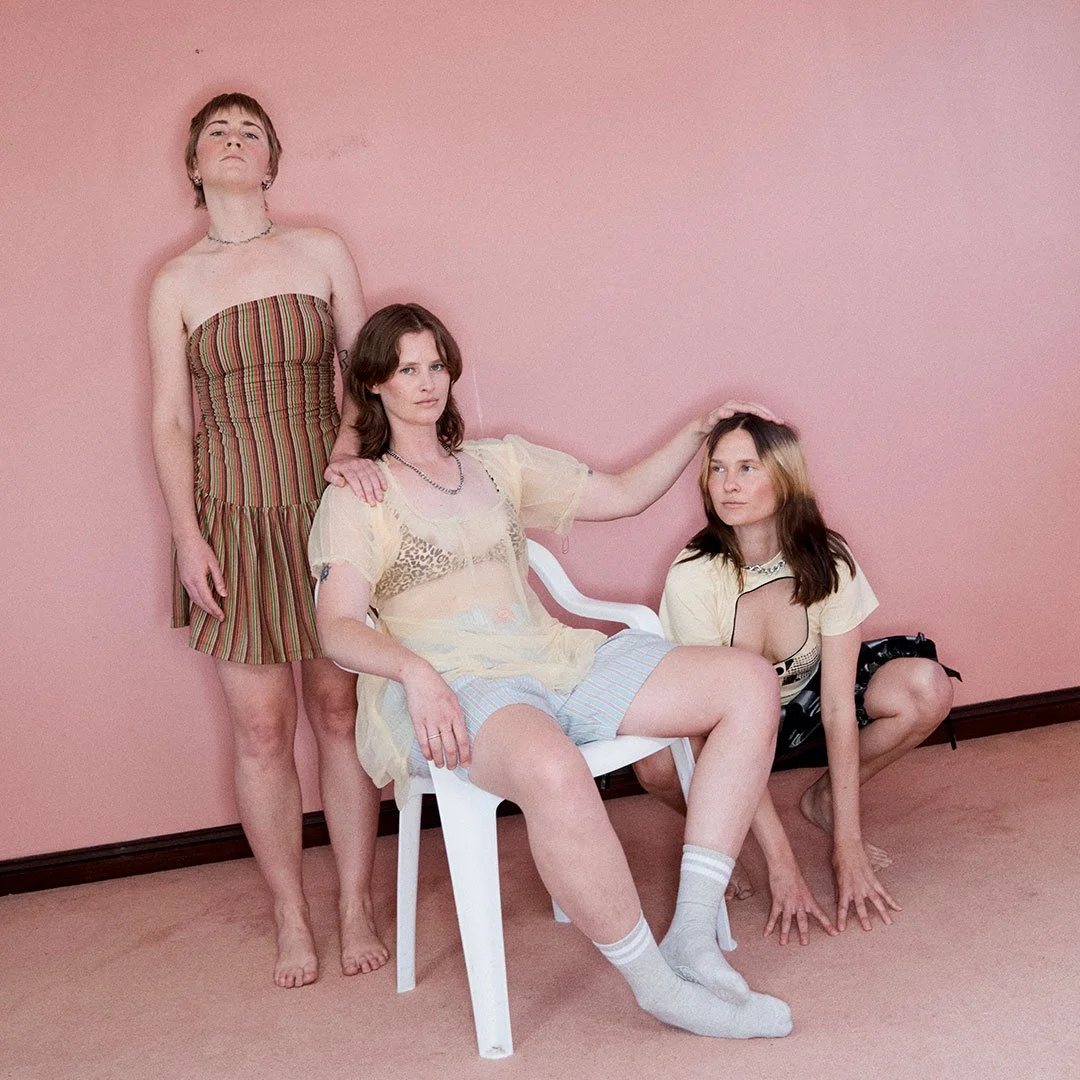
Photo by Hannah Scott Stevenson
UpToHear: A lot of Dogtooth deals with identity, politics, and what it means to move through the world in a body that’s already been politicized. Did those themes come into focus naturally while writing, or did you realize later that they were shaping the album?
Lily: When we started the album, we knew we wanted to draw on source material beyond personal experience, unlike our EPs, which were personal to the point of confessional. I started thinking about each song as a persona - a character that belonged in the world of the album (a kind of dystopian twilight zone). The POV was always going to be female, but the type of person she was, and what she felt and experienced - was a totally fresh slate to write into.
‘Trying on’ different archetypes became a way of exploring the feminised body from all these different angles. Those themes weren't necessarily things we set out to address, they emerged by inhabiting these characters and the world we'd created around them.
UpToHear: There are a lot of interesting influences throughout the record, from PJ Harvey and gothic fiction to spaghetti westerns and Australian storytelling. Were those references things you consciously brought into the writing?
Rikki: Yes, we definitely thought a lot about the references we wanted to explore through this album, and through the entire process of writing, recording, and releasing this album, we kept coming back to the Australian Gothic. A lot of our songs reflect a kind of disillusionment with the Australia which we have inherited (as three white women), and our guilt in being part of a colonial legacy. The Australian Gothic genre gave us an avenue to explore these feelings through depictions of hostile landscapes and a constant desire to change form, so as to better belong within its bounds.
UpToHear: The title track is described as a love song, which is a funny contrast given the imagery around it. What was it about the idea of loving someone “like a dog” that stuck with you?
Lily: The fact that it’s an oxymoron. The dog - a symbol of domesticity. Servile, but also carnal, animalic, free. To be called a dog is a slur, but there isn’t a more loyal or loving creature. A perfect analogy for the hypocrisies of modern womanhood. For us, the image of the dog became a vehicle for the themes of this body of work.
UpToHear: Sweetie started during lockdown as a way to learn how to play together. Six years later, you’re releasing your debut album. When did it start to feel like this was becoming something bigger than just a project between friends?
Lily: In 2024 we received a sum of grant money from the government to make this album which was surreal not only because we had never seen those kinds of dollars in a bank account before but also because it immediately gave us the resources to take ourselves seriously. We suddenly could take care, take time, bring in collaborators who we respected and plan seriously for the future. It quite literally changed the trajectory of this band and we’re eternally grateful that we live in a country that supports emerging art in this way.
UpToHear: You’ve said you’re not interested in smoothing out your rough edges. Was that something you had in mind from the beginning, or did it become clearer as the band found its identity?
Lily: We are a DIY band through and through, and in that sense, it would be literally impossible to smooth our rough edges. But we’re also nodding towards the feral, un-polished schtick of our riot grrl forebears - The Slits, Kleenex, The Raincoats. It’s annoying to me that the great female bands of that era were known as being scrappy (they so weren’t) but what they did do is project to the world that music is for everyone and you can make it, with your friends, by whatever means you like, no matter what you know or how many dudes there are on the lineup. Being ‘rough’ is an act of inclusivity - which mattered to us so much when we started, and continues to matter to us today.
Connect with Sweetie: Bandcamp | Spotify | Instagram | Facebook
Catch them on tour:
Friday, 30 October - Junk Bar, Brisbane/Meanjin
Sunday 8 November - The Servo, Port Kembla/Dharawal
Saturday 14 November - Thornbury Bowlo, Melbourne/Naarm
Saturday 28 November - Heaps Normal Health Club, Sydney/Gadigal