
Gejo on Memory and Landscape
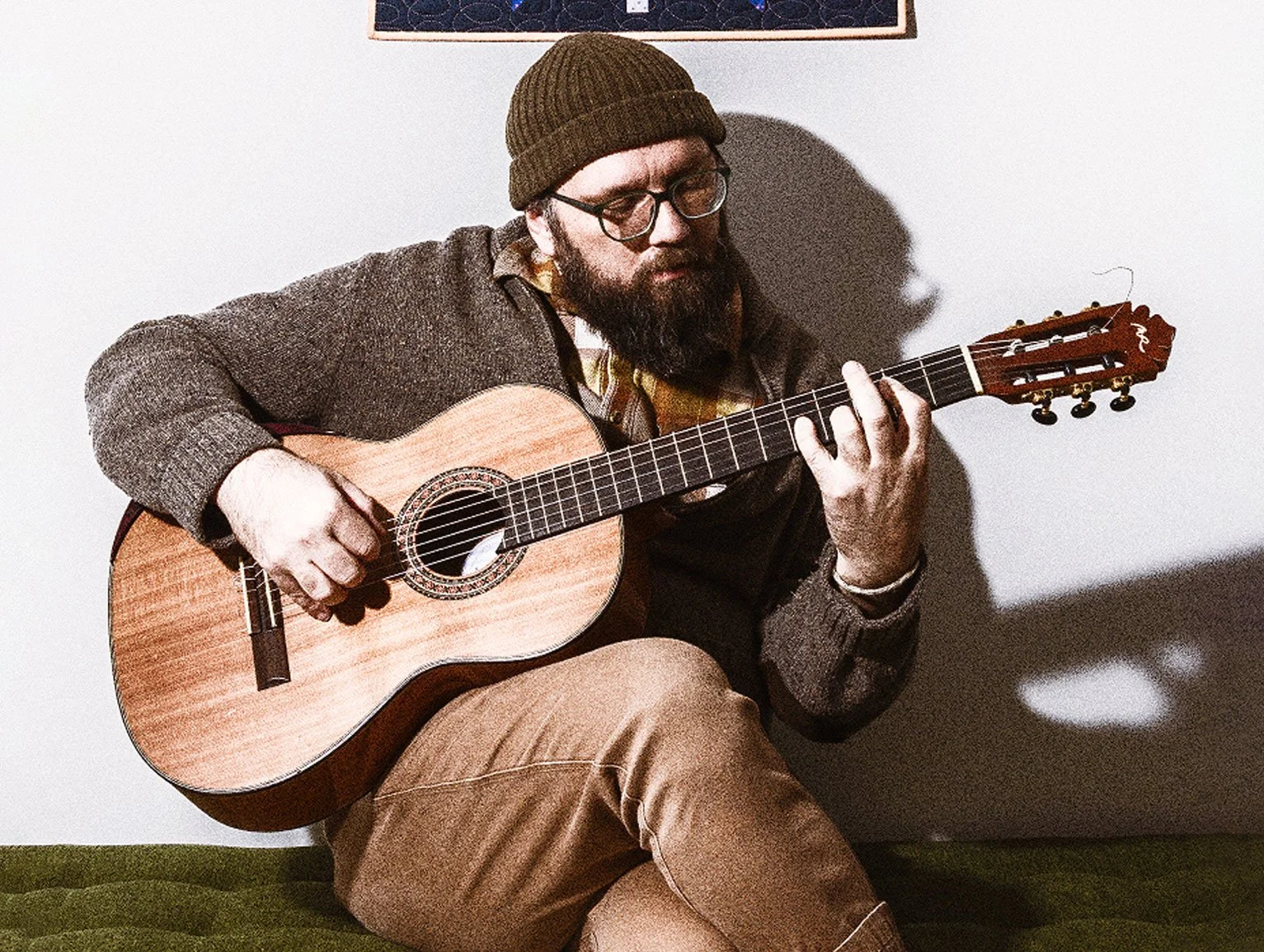
From the western desert of Utah, Joseph Reni, aka Gejo, crafts introspective, ethereal dark-folk rooted in nostalgia. With his latest single “Callous” leaning into something more energetic, we caught up with him to talk through its creation and the experiences that eventually shape his lyrics.
UpToHear: On “Callous,” we were initially drawn in by the vocal production, which warmly reminded us of Flyte. Are they an influence on your work? If not, who do you feel has shaped your approach vocally or sonically?
Gejo: I actually didn't know Flyte before this year, but I’m currently recording another song with a different producer who also told me my voice reminded them of Flyte. I’ve started listening to them more after the production of this album. Vocally, my approach is entirely about "finding my voice." I don't feel like I have a naturally good voice; it took many years of being told "you shouldn't sing" to finally discover my upper, airy register, which is where people started to appreciate it. Over time, I've gotten better and have taken voice lessons, but the whole journey was really just an effort to find a sound that made me feel emotional. That became my foundation.
UpToHear: This new track really takes off toward the end of the first verse. What drew you toward something more upbeat and energetic compared to some of your darker folk material?
Gejo: Sonically, that was the work of my producer, Nate Pyfer. He had a strong vision for what he wanted my vocals to sound like. To be honest, I felt a little exposed by it at first. It sounded so compressed and saturated that I could hear all the parts of my voice I’m normally self-conscious about.
UpToHear: Oh wow! We never would have guessed this… It actually comes off as unbelievably confident!
Gejo: Yeah, he worked his magic, and in retrospect, he found a way to pull me out of a traditional sound and tap into the eerie parts of my tone.
UpToHear: You’ve described “Callous” as being about “being confronted with suffering and not having a clean answer for it.” Do you tend to draw directly from personal experience in your writing, or do you sometimes create narrative distance through characters?
Gejo: “Callous” is an angry, sad song. Part of the production process involved replacing some of the heavier guitar parts with other instruments to recreate that intensity. When I got the tracks back from Ryan Tilby (banjo, bass, steel guitar), it took on an entirely new life. It wasn't the original sound I had in my mind, but truthfully, it changed the way I looked at the song. There is something beautiful about taking angry, sad lyrics and presenting them in an unexpected way. It creates a new feeling that completely escapes the trite.
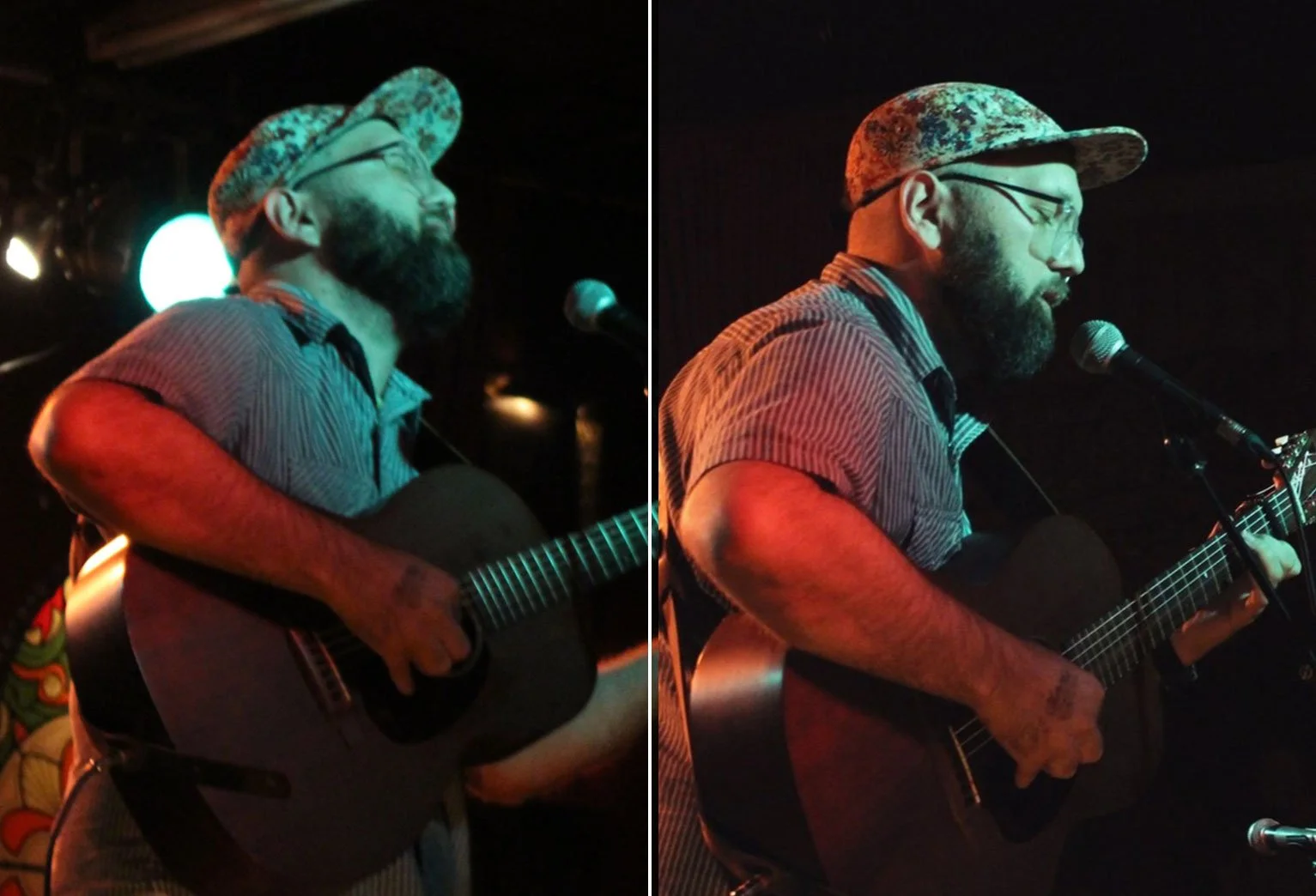
UpToHear: What does your writing process typically look like? A prominent refrain in “Callous” is “this blood is on your own hands.” Was the song built around that line, or did it arrive later in the process?
Gejo: "Callous" was originally titled "Drugged Up, Dead Drunk." When I was a sophomore in high school, I was in a horrible accident with a drunk driver that caused severe trauma to my mind. I lost my speech and locked myself away in my room for months, doing nothing but playing guitar and writing songs. Right after the accident, I felt so lost and confused; I didn't know how to handle the situation, and it made me angry. I had to learn how to accept it. The line “this blood is on your own hands” was my way of describing the driver's ownership of what happened. Tragically, that same driver was involved in a second accident about a year later and became a quadriplegic. I changed the title during recording because I felt “Drugged Up, Dead Drunk” was just too literal. Plus, there was an old video floating around labeled “Joe Reni - Drugged Up, Dead Drunk” that felt like a statement about me. (lol)
UpToHear: That is quite heavy… When we saw the track was described as “waking up inside a crash—that disorienting, heart-thumping moment of trying to make sense of the wreckage around you,” we had no idea how literal it was…
Gejo: All of my songs are memories. Each one captures "the feeling" of a specific event or time in my life. Typically, I just sing random words until I feel emotional, and then I keep them. It doesn't always make logical sense. Sometimes, like with "Seasons Change," I change the lyrics every time I sing it live because I know the core emotion, and the words are just trying to embody it. Once a track is officially recorded, though, I try to make sure I remember the right words.
UpToHear: The EP’s opening track, “Gangsta’s Paradise,” is far removed from the original version. What drew you to reinterpret that song specifically?
Gejo: For "Gangsta’s Paradise," I just realized one day that the lyrics were incredibly deep and perfectly matched the emotion of a guitar part I was working on. The song actually started as an original composition, but once I locked the lyrics into it, it just felt right. That said, I might still record the original version of that song one day.
UpToHear: We recently took a trip through Zion and Bryce Canyon, and it got us thinking about landscape as creative influence. Do Utah’s red rocks and wide-open spaces shape your music in any tangible way?
Gejo: Utah and Zion—yes, a resounding yes. The mountains protect me, and I feel completely lost without them. They are big and grand, and I feel like each of my songs attempts to mirror that by building and building until I'm practically screaming at the end. Some of that dynamic energy gets smoothed out a bit during recording, but it’s an intrinsic, intentional part of my songwriting.
UpToHear: If you could only hold onto three records for the rest of your life, what are they?
Gejo: It’s always hard to narrow these things down, but if you counted up the sheer hours of listening over my entire life, the albums that float right to the top are: Radiohead – OK Computer, Paul Spring – The River Flows Two Ways, and Cursive – The Ugly Organ.